On this page
By Bunaken Island Editorial Desk
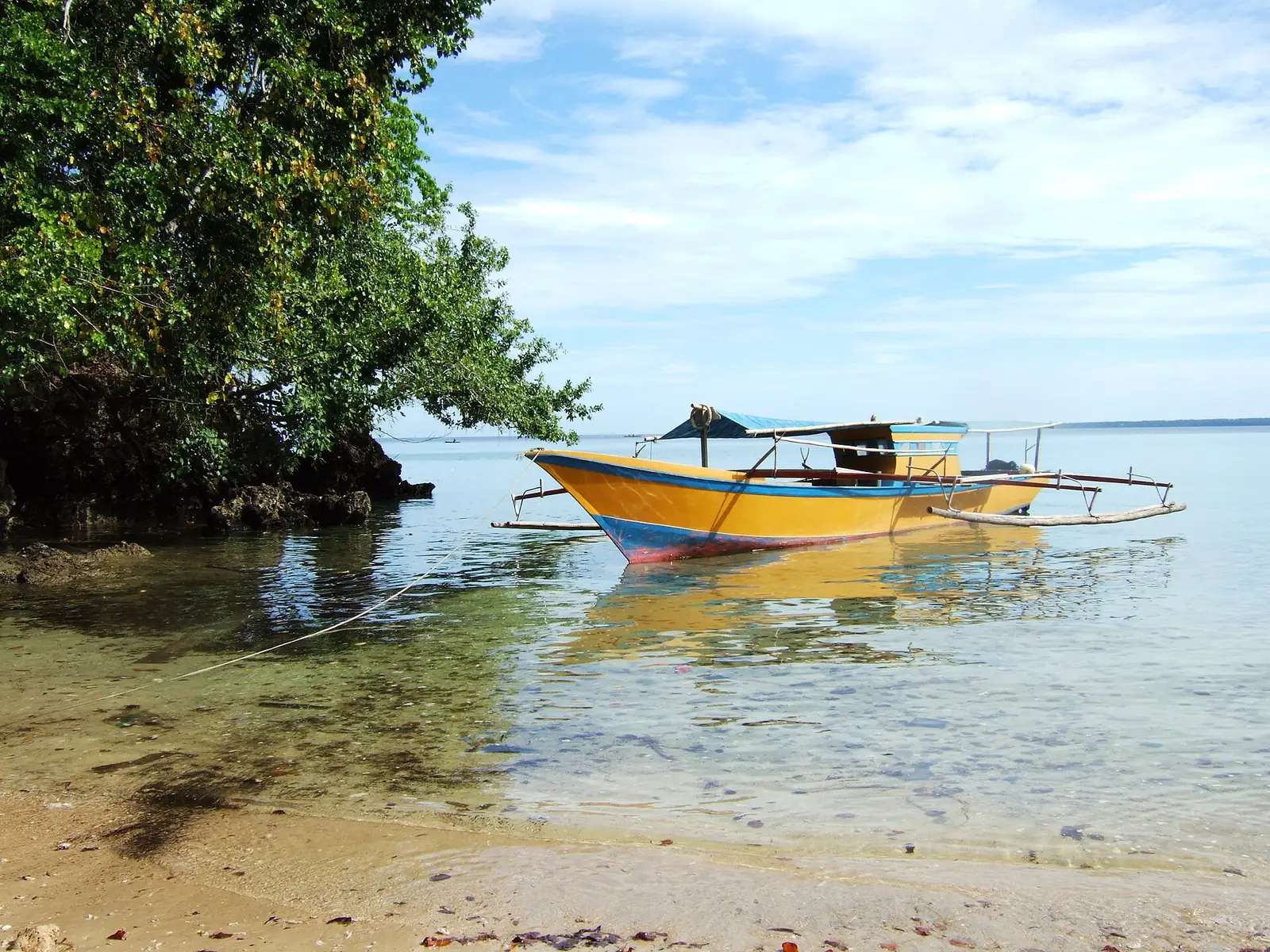
Is Bunaken safe? That depends on what you plan to do. The documented risks are strong, fast-changing currents, monsoon boat delays and limited medical care on the island. None of these rules out a trip, and nobody can guarantee your safety, so take each risk separately and plan for it before you travel.
Is Bunaken safe to visit?
It depends on the activity. The sources on this page carry no accident rate for the island or the park, so be wary of any percentage or claim of total safety. What they do offer is a picture of risk by type, and this page works through it. It is general information, not medical or legal advice.
| Risk | What sources report | What to do |
|---|---|---|
| Currents and walls | Strong, fast-changing currents; walls fall past recreational depths | Dive within your level; stay with the guide |
| Snorkelling offshore | Reef about 40 m from shore; currents can change quickly | Use fins and a fixed reference point |
| Boat delays | Cancellations in the monsoon; a two-day delay is possible | Leave spare days before flights |
| Medical care | Limited on the island; nearest chamber in Manado | Confirm the plan before diving |
| Drinking water | Covered on our where-to-stay page | Ask your host what is provided |
| Natural hazards | Country-wide earthquake, tsunami and volcano warnings | Read current official advice |
What are the main risks in the water?
For divers, the issue is the combination of current and depth. Wikivoyage puts many sites in the intermediate or advanced bracket because of the steep walls and currents that change fast. At island points, Scuba Guide says, current can speed up with little warning, and because walls fall past recreational depths, buoyancy matters. Siladen Resort singles out Lekuan's corners for strong current, while adding that sheltered stretches are usually an option.
Neptune Liveaboards reads the same water more generously. It calls Bunaken beginner-friendly, yet it tells newer divers to stay close to the wall and their guide because of downwellings. That is an operator's opinion, and the warning attached to it is the part to take seriously. Our page on Bunaken for beginner divers covers how to choose sites and what to ask for.
Snorkellers are not exempt. Wikivoyage says the reef is about 40 m from shore and advises fins and a reference point, because currents can change quickly. It also warns against walking on corals when returning at low tide, favours a kayak for reaching spots, and notes that the beach may disappear at high tide, so a bag left on the sand could get wet. The sources on this page set no safe level for weak swimmers, non-swimmers, or children. If you are not a confident swimmer, ask a provider in writing what it can offer, or stay out of the water. Our page on snorkelling at Bunaken explains how to choose a spot.
Ask your host about stings and cuts, and what first aid is on hand; our sources name no jellyfish season for Bunaken. Some activities are legal risks as well as ecological ones. Sulawesi.com, a travel publisher that also sells tours, lists plastic, anchoring away from buoy zones and fishing within the park as formal offences, so treat all three as off limits.
What about the boats?
The clearest documented boat problem is reliability. The same publisher says cancellations and delays to the afternoon public boat cluster in the November to March monsoon, and that January or February can bring a delay of two days. It also describes a cargo boat, which tells you it is basic, though not whether it is unsafe. Wikivoyage adds that wet-season storms can last several days.
The sources on this page say little about lifejackets or boat inspections, on public or private boats, so put the questions to the crew. A rough crossing is not a reason to rush. Our Manado to Bunaken guide compares the boat types, and these questions are worth asking whichever you choose:
- Is there a lifejacket for each passenger, and can you see them before departure?
- Who decides to cancel when the sea is rough, and do you get your money back?
- Is there a radio or phone on board, and who knows the boat has left?
- How many passengers and how much cargo will it carry today?
If the answers worry you, do not board. That may mean losing a day, which is one more reason to keep spare days.
How close is medical help?
For anything serious, not close: plan on a boat crossing. The Indonesia Guide says medical facilities on Bunaken are limited, and that the nearest recompression chamber is in Manado. Siladen Resort says a chamber is in Manado, under 2 hours from its resort. That is an operator's statement, measured from its own location, so the trip may take longer from elsewhere or when the sea is rough.
The status question is a real one. Scuba Guide says Manado-area recompression facilities change status over time, and it advises routing emergencies through emergency medical services and DAN. So do not rely on a page written in the past, this one included. Before your first dive, ask your operator to confirm these points:
- Is the chamber in Manado operating now, and when did the operator last confirm it?
- Is emergency oxygen on every dive boat, and who is trained to use it?
- How would an injured diver travel to Manado at night or in rough seas?
- Which phone numbers should you keep for emergencies?
Ask your insurer in writing whether your policy covers diving at your planned depth, plus evacuation from a small island. Requirements vary by policy and by operator. Non-divers should also check evacuation cover, because any serious illness or injury means a boat crossing before you reach a hospital.
Flying after diving belongs in the same conversation. Ask your doctor or dive insurer what interval applies. This site gives no figure.
What does official travel advice say?
The US State Department rated Indonesia Level 2, exercise increased caution, in an advisory issued on 7 July 2026. The same advisory notes earthquakes, tsunamis and volcanic eruptions, and it counts 127 active volcanoes in the country. These warnings are country-wide, and they do not single out Bunaken or Manado. Advisories change, so read the current version, along with your own government's advice if you are not American.
Our sources offer little on crime in Manado or on solo and female travel, and that gap is not evidence either way. Use the ordinary care you would use anywhere new, tell your accommodation your plans, and ask your host about walking at night, particularly since Wikivoyage says many island paths are impassable after rain.
What about malaria and mosquitoes?
This is a question for a clinician, not a travel guide, and travel blogs are not a sound basis for a medical decision. Speak to your own doctor or national travel health service well before departure, and tell them you will be on a small island off North Sulawesi, with limited medical care. They can advise on malaria, vaccinations and mosquito protection for your own health and dates.
What else do travellers ask about safety on Bunaken?
Is Bunaken safe for diving?
Nobody can promise that, and the water is not forgiving. Currents can change quickly and walls fall beyond recreational depths, so stay within your training, keep close to your guide and choose an operator who will change sites. Confirm the recompression plan before your first dive, not after.
Is Bunaken safe for snorkeling?
Nobody can promise that. Wikivoyage advises fins and a reference point, since the reef lies about 40 m from shore, and it warns against walking on corals at low tide. The note on weak swimmers and children above applies, and our snorkelling page has the questions to ask.
Is there a hospital on Bunaken?
Do not count on one. The Indonesia Guide says medical facilities on the island are limited. Assume anything serious means a boat crossing to Manado, and find out from your host where the nearest clinic is and how an evacuation works before you need it.
Is tap water safe on Bunaken?
Wikivoyage reports no natural potable water on Bunaken, so ask your host what is safe to drink. Our where to stay guide covers the island's water supply along with what else to check before you book.
Is Manado safe for tourists?
The US State Department's Level 2 rating covers Indonesia as a whole, not Manado on its own. Read the current advisory and your own government's advice, and ask your hotel about the areas you plan to visit.
Which sources support this page?
- Wikivoyage: Bunaken
- Scuba Guide: Bunaken
- Siladen Resort: dive sites map (operator)
- Neptune Liveaboards: Bunaken diving (operator)
- Sulawesi.com: Bunaken marine park diving (publisher that also sells tours)
- Sulawesi.com: the Manado to Bunaken boat question (publisher that also sells tours)
- The Indonesia Guide: Bunaken diving
- Siladen Resort: FAQ (operator)
- US State Department: Indonesia travel advisory
How do I reach the desk?
We cannot give medical or legal advice, but we can pass along practical questions for a trip you are planning: WhatsApp +62 811-3941-4563 or bd@juaraholding.com. Enquiries can lead to a paid booking, so we have a commercial interest in them. We make no promise about safety, weather or boats, and any arrangement would be set out in a written offer naming the price, any fee and the company responsible for it.
Send the desk your dates, group size, and dive level. The desk replies in writing.
Ask the desk on WhatsApp bd@juaraholding.com